Your practice will evolve. You know this somewhere deep down, even if you can't articulate how.
The work you're doing now won't be the work you're doing in five years. Your needs will change. Your methods might shift. You might dive deep into something unexpected. You might discover that what you thought you needed, you don't, and what you didn't think you needed, you can't work without.
Most furniture is designed assuming a static set of needs. You buy a desk, a shelf, a cabinet, and they're supposed to work forever, regardless of how your practice evolves.
This is one of the reasons handcrafted furniture is so powerful: it's built with an understanding that practice is a living thing. That it changes. That your workspace needs to grow with you.
Anticipating Evolution
You can't predict exactly how your practice will change. But you can build in the possibility of change.
When you're working with a maker on your desk and storage, talk about what might evolve. If you're a writer now, might you eventually need space for teaching materials? If you're a designer, might you eventually need more space for models or physical work? If you're a maker with your hands, might your work expand to need new tools or materials?
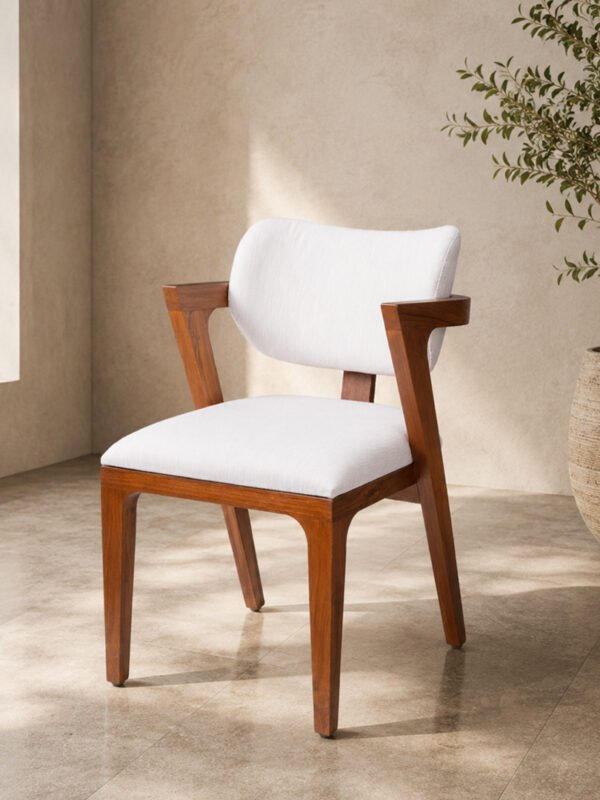
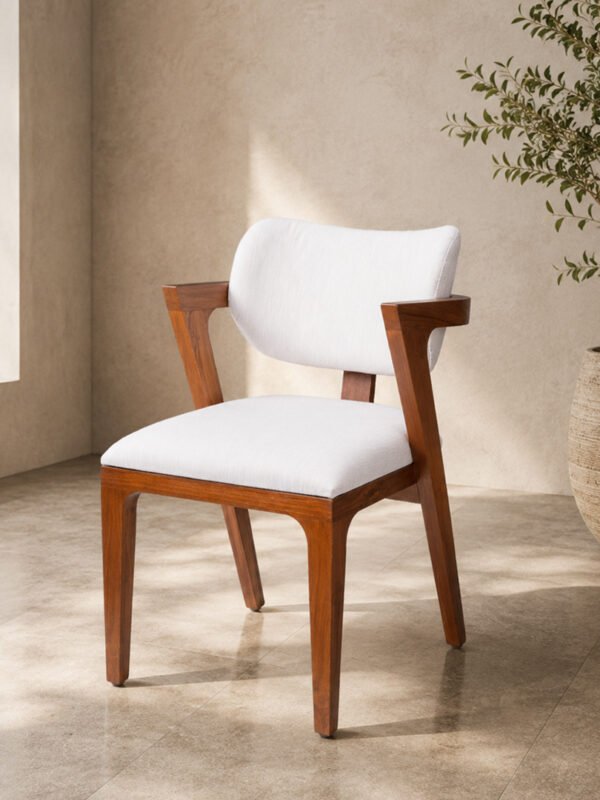
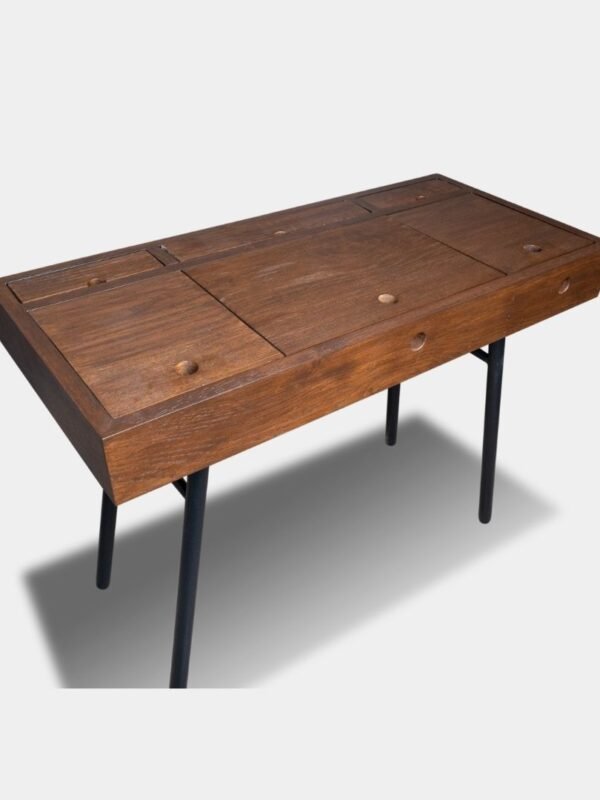
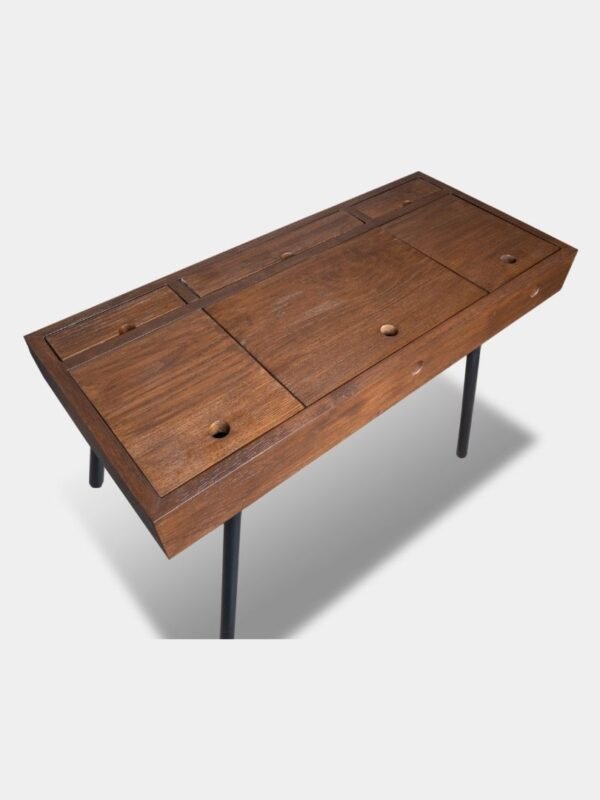
A good maker will ask you these questions. They'll build in flexibility. Maybe that means a desk with modular components that can be reconfigured. Maybe it means storage that can grow—shelves that can be added, not fixed. Maybe it means choosing a base desk that can be added to later, rather than replaced.
The goal isn't to predict the future. It's to build a system that can adapt without requiring you to start over.
Modular Thinking
The best workspaces aren't built all at once. They grow.
You might start with a desk and chair. A year later, you add a shelf because your reference materials need a home. Another year, you add a narrow table for laying out work. Eventually, you have a system that evolved with your practice, rather than one that was designed for an imagined future.
Modular thinking means building pieces that can work independently or together. A shelf that doesn't depend on a specific desk. A storage unit that can sit anywhere. Pieces that were designed to potentially be added to over time.
This is different from modular furniture that comes with instructions for "reconfiguring." It's more organic. It's pieces that are beautiful and functional on their own, but that fit together when needed.
Intentional Organization
As your practice evolves, you'll develop better understanding of how you actually work.
Maybe you realize that you need to see your research while you write, which means open shelving near your desk. Maybe you discover that you think better when your workspace is completely clear, which means you need different storage. Maybe you find that you do your best work in phases, and you need separate surfaces for different phases of work.
Evolution often brings clarity about what you actually need, versus what you thought you should have.
The organization system builds around this clarity. It's not imposed from outside—it emerges from how you actually work. And it changes as your understanding deepens.
Scaling Your Practice
Maybe your practice grows in scope. What started as a personal creative practice becomes a business. You're working with clients or collaborators. Your workspace needs to accommodate more people, more projects, more complexity.
Or maybe your practice deepens without growing—you're doing fewer projects, but each one is more substantial. Your workspace needs to reflect that intensity.
Either way, your environment needs to scale with your practice.
This is where a handcrafted foundation is invaluable. You're not starting over. The desk that served you well five years ago? It still serves you. Now you're adding to it. Expanding around it. Growing into a bigger system while keeping the things that worked.
The Psychological Weight of Organization
Here's something most people don't talk about: how you organize your space is a form of self-talk.
A cluttered space says: I don't have control. There's too much. I'm overwhelmed.
An obsessively organized space says: I need everything in control. Nothing can be out of place.
An intentionally organized space says: I know what matters. Everything here serves my work. I'm clear about what I need.
As your practice evolves, your organization usually needs to evolve too. Not because you've become more organized or less organized, but because your needs have changed.
The goal is to notice this and adapt rather than fight against the evolution.
Investment in Flexibility
Building flexibility into your workspace requires thought and intention. It costs more than buying the cheapest desk and hoping it lasts forever.
But this is the same math as before: if you use this space for your work for the next fifteen years, the cost of building in flexibility is tiny per hour. The benefit of not having to replace your entire workspace when your practice evolves is enormous.
A good maker understands this. They'll build in a ways to expand. Brackets for future shelves. Standardized sizing so components can be added. Open designs that can accommodate new pieces. A commitment to repairs and refinishing so the desk can be maintained, adapted, evolved.
This isn't just furniture. It's infrastructure for a practice.
Building Over Years
The beautiful thing about building your workspace to grow with your practice: you don't have to figure it all out now.
You build your foundation—a good desk designed for your actual work. You anchor that. You live with it for a while. You learn what you actually need.
Then you add. A shelf. A storage unit. A different chair. Another surface. Each addition is based on real knowledge of how you work and what you need.
Years later, you look around your space and realize: it evolved with me. It fits my practice in a way a generic, pre-designed workspace never could. Because it was built on intention, and that intention adapted as I did.
The Legacy Perspective
There's also this: if you build well, if you invest in pieces that can grow and adapt and be maintained, your workspace becomes something you pass on.
Your children might work at this desk. Your practice might become their practice, or they might bring their own practice to it. The flexibility you built in—the choice to use real materials, to work with a maker, to think about growth—means the space can hold someone else's work too.
This is the opposite of disposable workspace. It's a space that matters enough to maintain, to adapt, to pass along. And in building that space, you're building something that says: what we do here is serious. It's worth investing in. It's worth growing with.