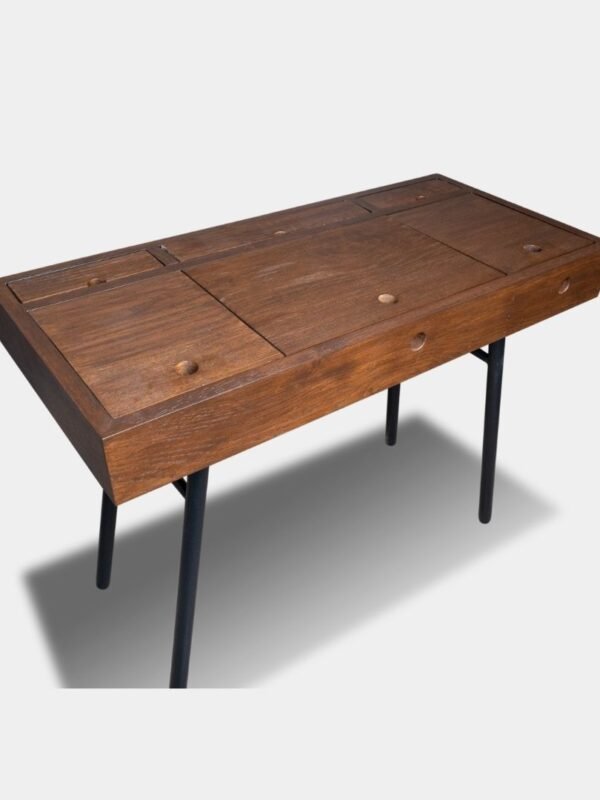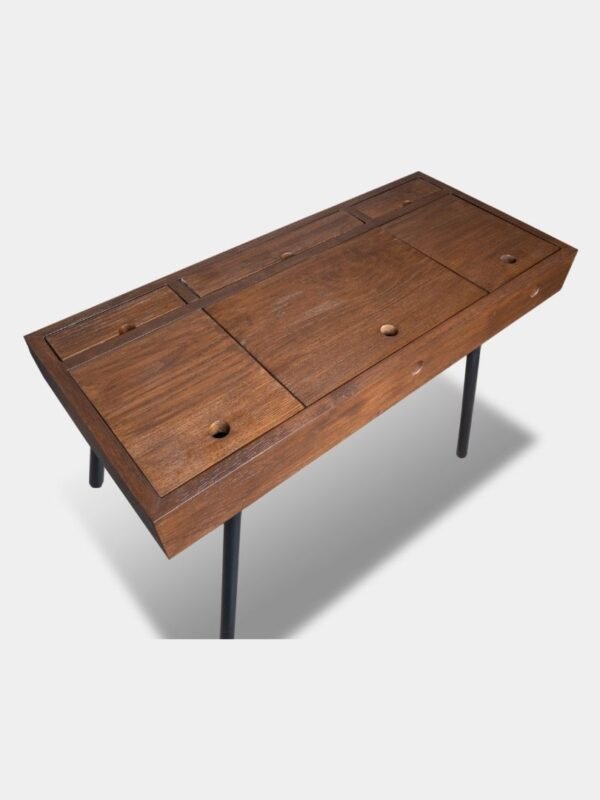
A well-designed study table genuinely supports focus and good habits during formative school years. Thoughtful design choices make a measurable difference in how comfortably and productively children study.
Ergonomic Basics for Young Students
- Adjustable chair and desk height as children grow through school years
- Adequate legroom without cramped positioning underneath
- Proper desk depth for textbooks and writing space simultaneously
- Good lighting positioned to avoid shadows over the writing area
Storage and Organization Features
- Built-in drawers for stationery, books, and school supplies
- Open shelving for frequently used reference materials
- Pegboards or corkboards for schedules and reminders
- Cable management for laptops and charging devices
Design Choices That Encourage Focus
- Minimal visual clutter in the immediate study area
- Position facing a wall or away from high-traffic distractions
- Durable surfaces that withstand pencil pressure and occasional spills
- A design that feels distinctly separate from play or relaxation areas
A dedicated, well-designed study space helps children associate that specific area with focus and learning, which can meaningfully support better study habits over time.
Frequently Asked Questions
Q: What height should a study table be for children?
A: This varies by age, but adjustable-height desks are ideal since they can be modified as the child grows rather than requiring replacement.
Q: Should a study table face a window?
A: Natural light is beneficial, but facing directly toward a window can create screen glare and distraction — positioning to the side often works better.
Q: How much desk space does a student actually need?
A: At least 90-100cm width provides adequate space for books, a laptop, and writing materials without feeling cramped.
Q: Can study tables be designed for two children to share?
A: Yes, custom double study tables with divided sections can work well for siblings sharing a room, provided there's adequate individual space.
Q: What storage is essential for a children's study table?
A: At minimum, one or two drawers for stationery and a shelf for textbooks helps keep the study area organized and distraction-free.