There are some objects that should last multiple lifetimes.
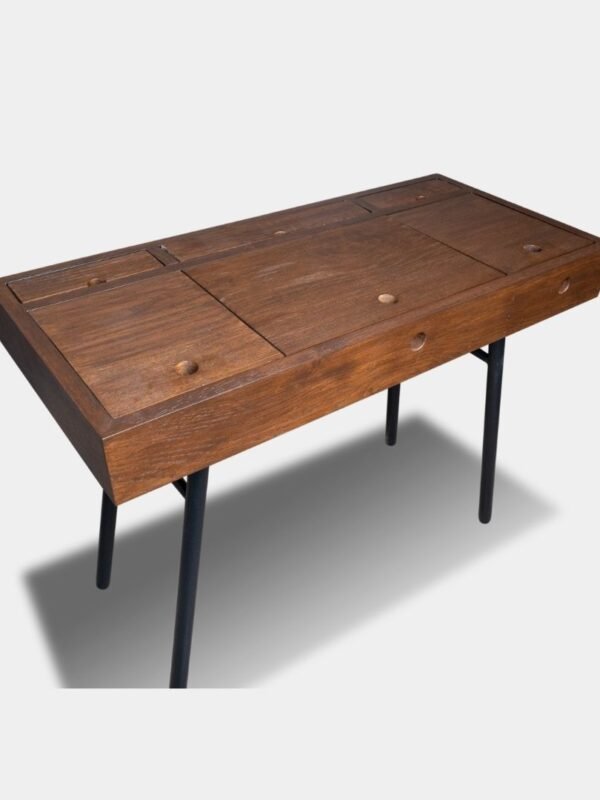
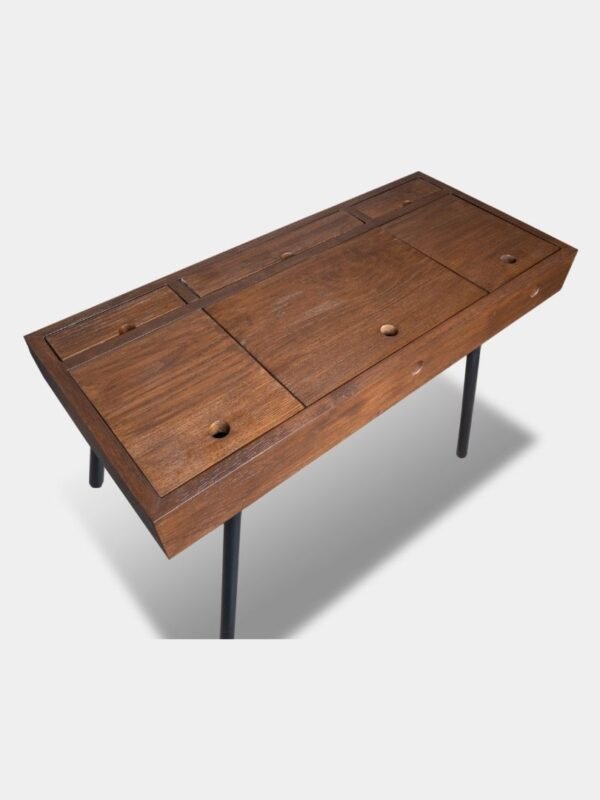
A good knife passes from a grandparent to a grandchild. A wooden chest holds the keepsakes of a century. A handcrafted desk, made from solid wood and finished to develop patina, becomes an heirloom.
This isn't about sentimentality, though there can be some of that. It's about practical, material investment. It's about building something so well that it makes no sense to replace it. It's about creating an object that becomes more beautiful, more valuable, more loved over time.
The Lineage of Creation
When you sit at a handcrafted desk, you're not sitting at a product. You're sitting at the result of a maker's intention.
Someone chose the wood. Evaluated it for grain, for durability, for character. Someone designed the desk knowing it would hold someone's important work. Someone built it by hand, or with hand-guided tools, making thousands of micro-decisions about proportions and finishes and structure.
That investment in creation creates something that lasts.
Compare this to a mass-produced desk. Optimized for profit. Designed for a lifespan that makes marketing sense (five years? ten?). Built to minimum standards that satisfy regulations but not much else. Shipped around the world on fuel, assembled by someone paid minimum wage, bought and used without any connection to the act of making.
That desk will end up in a landfill.
The handcrafted desk might end up in your grandchild's creative practice.
What Makes Furniture Generational
Generational furniture has specific characteristics.
It's made from real materials—solid wood, not veneers over particleboard. This means it can be repaired. It can be sanded if the finish wears through. It can be refinished if the color fades. It can be restored. It's not disposable.
It's designed with proportion and elegance, not with trend. Trends change. Proportion doesn't. A well-proportioned desk from a hundred years ago looks right today. It will look right a hundred years from now.
It's built to be maintained. The maker designed it understanding that it will be used, scratched, lived with. The design accommodates aging rather than fighting against it.
It's built by someone who cares. There's something almost spiritual about object-making done with this level of intention. The maker's care extends the life of the object through some mechanism that can't quite be explained but absolutely exists.
The Story It Carries
This is the thing people don't expect: objects that are cared for through generations develop a kind of consciousness.
Your grandparent worked at this desk. You can see the spot where their lamp always sat, marked by the slight fading of the wood from direct light. You can see the pencil marks in the drawer—measurements they made that they never erased.
Your parent worked at this desk. You find a note in the back of a drawer from a project they were working on twenty years ago. There's a burn mark from the day they set down a cigarette and forgot about it.
You work at this desk. Your hands wear smooth the spots where you rest them. You add your own marks, your own patina.
Over generations, the desk becomes a palimpsest. Each person who worked there left traces. The object becomes a witness to multiple creative practices, multiple ways of thinking, multiple lives lived partly at this surface.
That's not just furniture. That's history. That's love made manifest in wood and finish and proportion.
Choosing for Durability
If you're going to invest in a desk that might outlast you, certain choices matter.
Choose solid wood, not veneers. Wood that's known for durability and grace with age. Walnut, oak, cherry, teak—these woods have been used in furniture for centuries. They get better with time, not worse.
Choose a maker who stands behind their work. Who will repair it if something breaks. Who has been making furniture for decades and understands that durability is the goal, not planned obsolescence.
Choose simplicity over complexity. The more moving parts, the more that can break. The more complicated the design, the harder it is to repair. The most generational furniture is often the simplest—classic proportions, no trend elements, no unnecessary complexity.
Choose proportions that will stay right. A desk in proportion to human scale will always look right. A desk designed around a fad or trend might look awkward in twenty years.
The Maintenance Ritual
An object built to last requires care. This isn't a burden if you understand what you're doing.
You're not preserving. You're maintaining. You're living with something and taking care of it the way you'd take care of something valuable.
Occasional oiling to keep the wood nourished. Wax on the finish to protect it. Attention to spills so they don't stain. In a climate with big seasonal changes, perhaps some attention to how the wood moves.
This care is part of the relationship. It's not separate from using the desk—it's part of using it. It's the way you say: I recognize what this is. I'm honoring it.
And as you care for it, your children see this. Your grandchildren see this. Maintenance becomes ritual becomes value becomes inheritance.
The Investment Over Time
A handcrafted wooden desk costs significantly more than a cheap desk. Three to five times as much, easily. For some makers, more.
But let's do the math that matters.
If you use a desk for 10,000+ hours per year for 50 years, that's 500,000+ hours. The expensive desk costs maybe $5,000. That's one penny per hour. Over a lifetime of use, the cost is negligible.
Moreover, that expensive desk holds value. You could sell it for close to what you paid for it, or more—good handcrafted furniture appreciates. That cheap desk? It's worthless by year five.
But more importantly: you're not buying a desk for yourself. You're buying a desk that will serve multiple people across decades. You're making an investment in creative infrastructure. You're building something that will hold your children's dreams, your grandchildren's work, your family's history.
That's not an expense. That's a commitment.
Passing It Forward
When the time comes to pass this desk to the next person, it carries something with it.
They're not inheriting just an object. They're inheriting the fact that someone thought enough of creative work to invest in supporting it. They're inheriting evidence that their family takes making seriously. They're inheriting something that was real, that was cared for, that was loved.
And they'll add to its story. Their scratches, their marks, their years of work—these will layer onto the generations before. The desk will become richer, more complex, more itself.
That's not something you can buy new. That's something that accumulates only through time, through use, through care.
The Generational Desk
Invest in a desk that will outlast you. Choose wood that ages beautifully. Choose a maker who cares about durability and proportion. Choose simplicity over trend.
And then use it. Mark it. Live with it. Care for it.
Over decades, your desk becomes part of your family's story. It becomes witness to your creative practice and the creative practices that come after. It becomes an object that carries not just utility, but meaning.
That's the desk you pass down. That's the furniture worth investing in.